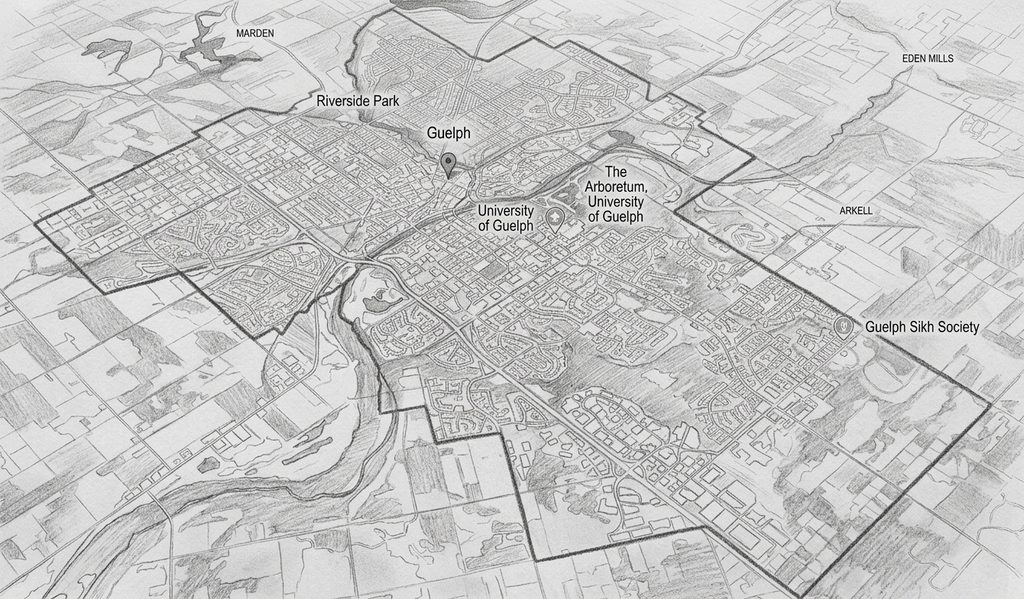
Reliable, affordable high-speed internet should not depend on which part of Guelph you live in.
A resident recently brought forward a clear example of the gap. At a home on Sherwood Drive, only a few kilometres from City Hall, the fastest available Bell plan was 50 Mbps download and 10 Mbps upload for $85 per month. At another address only a short distance away, that same price offered symmetrical 3,000 Mbps service.
That disparity is unacceptable.
Internet access is not a luxury. It is essential infrastructure for people working from home, students doing schoolwork, seniors accessing services, families using virtual health care, small businesses serving customers, and community organizations connecting with the people they support.
As Mayor, I will treat reliable connectivity as an essential part of Guelph’s long-term infrastructure planning.
What the City can do
The City cannot set Bell’s retail prices or force any telecommunications company to install fibre on a specific street. Telecommunications companies are federally regulated, and private providers make their own decisions about where and when to invest.
But Guelph is not powerless.
Telecommunications companies require municipal consent to construct lines in public rights-of-way. The City also manages road allowances, coordinates construction, issues permits for work in public space, and enters into municipal access agreements governing the use of City rights-of-way.
Guelph owns fibre and conduit infrastructure for City operations. That creates an opportunity to plan better, coordinate construction more effectively, and identify where appropriate municipal infrastructure could help reduce barriers for providers serving underserved areas.
The goal is not for the City to become an internet provider overnight. The goal is for the City to use the powers, assets, and planning tools it already has responsibly and strategically.
My commitments
A practical dig-once policy
As Mayor, I will champion a practical dig once policy.
When the City is undertaking major road reconstruction or coordinating significant utility work, staff should assess whether installing conduit for future communications infrastructure is technically practical and financially responsible.
Putting conduit in the ground while a road is already open can help:
- Reduce future excavation and construction disruption
- Protect newly rebuilt roads from being cut open again
- Lower future deployment costs for communications infrastructure
- Make it easier for more providers to expand service
- Support better long-term infrastructure coordination
This is not a promise to add conduit to every road project, regardless of need or cost. It is a commitment to make long-term communications planning a normal part of infrastructure decision-making.
A public infrastructure review
As Mayor, I will bring forward and champion a Council direction for a public staff report within six months on Guelph’s communications infrastructure and options for improving service in underserved neighbourhoods.
That report should address:
- City owned conduit and fiber infrastructure
- Areas where municipal assets may align with underserved neighbourhoods
- Existing operational, contractual, and capacity commitments
- Potential surplus capacity or future expansion opportunities
- Technical, legal, financial, procurement, and cybersecurity considerations
- Options for fair and transparent access by qualified providers
- The feasibility of a dig once policy
- Recommended next steps for Council
Residents deserve to know whether City-owned assets can play a role in improving service.
At the same time, the City must protect critical infrastructure. Detailed network maps, capacity information, and systems that support emergency services, traffic operations, water infrastructure, policing, or other essential functions cannot simply be made public. Transparency must be balanced with safety, privacy, operational continuity, and cybersecurity.
Direct provider engagement
In my first year as Mayor, I will convene discussions with Bell, Rogers, independent internet providers, City staff, and potential community-focused partners.
These discussions should focus on practical outcomes not vague announcements.
Providers should be asked directly:
- Which Guelph neighbourhoods are currently underserved?
- What prevents expansion in those areas?
- Would access to City conduit, coordinated construction, or clearer rights-of-way processes reduce those barriers?
- What commitments are providers prepared to make?
- What timelines and conditions would be needed to improve service?
I will advocate for public reporting on those discussions, including what providers say, what they are prepared to do, and what actions City staff recommend next.
Authority and limits
The City has a legitimate role in managing infrastructure built in public space. It can establish policies for its own construction projects, coordinate work in rights-of-way, manage municipal conduit and fibre assets, and negotiate the terms on which private carriers use municipal property.
A Mayor’s role is to set priorities, bring forward motions, build support on Council, convene stakeholders, and ensure that staff work is transparent and responsive to residents. Council must ultimately approve policies, budgets, agreements, and any use of City assets.
There are also clear limits:
- The City cannot set an internet provider’s retail prices
- The City cannot guarantee that a private provider will build fibre on a particular street
- The City cannot disclose sensitive operational or public-safety network information
- The City should not provide private benefit without transparent public value, legal review, due diligence, and Council approval
- Any agreement involving City assets must protect taxpayers and be fair, transparent, and lawful
Being honest about those limits is important. It is also not an excuse for inaction.
Better planning, better service
When streets are repeatedly excavated without coordination, Guelph residents pay through construction disruption, traffic impacts, damaged roads, and higher longterm infrastructure costs.
When a neighbourhood has limited provider competition, residents can face high prices, slow speeds, and few alternatives.
Guelph should plan ahead.
A thoughtful dig once policy, a clear inventory of municipal assets, and serious engagement with providers can help lower barriers to investment. These are practical steps that can create better conditions for reliable, modern service across the city.
A fair standard for Guelph
No resident should be told that near-minimum internet service is good enough simply because their neighbourhood has not been prioritized for an upgrade.
Guelph can do better.
As Mayor, I will work to use City infrastructure intelligently, protect public assets, demand transparency from providers, and build support on Council for practical solutions. Every neighbourhood deserves a fair opportunity to access modern, reliable, affordable internet service.
Evaristo Ramos
Candidate for Mayor of Guelph
References
- Telecommunications Act, R.S.C. 1993, c. 38, s. 43 — construction of telecommunications transmission lines in municipal public places and municipal consent:
https://laws-lois.justice.gc.ca/eng/acts/T-3.4/section-43.html - Municipal Act, 2001, S.O. 2001, c. 25 — municipal powers and jurisdiction over highways and related municipal matters:
https://www.ontario.ca/laws/statute/01m25 - City of Guelph — Road occupancy permits and requirements for work in the municipal right-of-way:
https://guelph.ca/business/licences-and-permits/street-occupancy-permits/ - City of Guelph — Bell Canada fibre installation information:
https://guelph.ca/living/house-and-home/bell-canada-in-guelph/ - Bell Canada — 2022 Guelph fibre expansion announcement:
https://www.bce.ca/news-and-media/releases/show/bell-expands-pure-fibre-internet-access-to-guelph